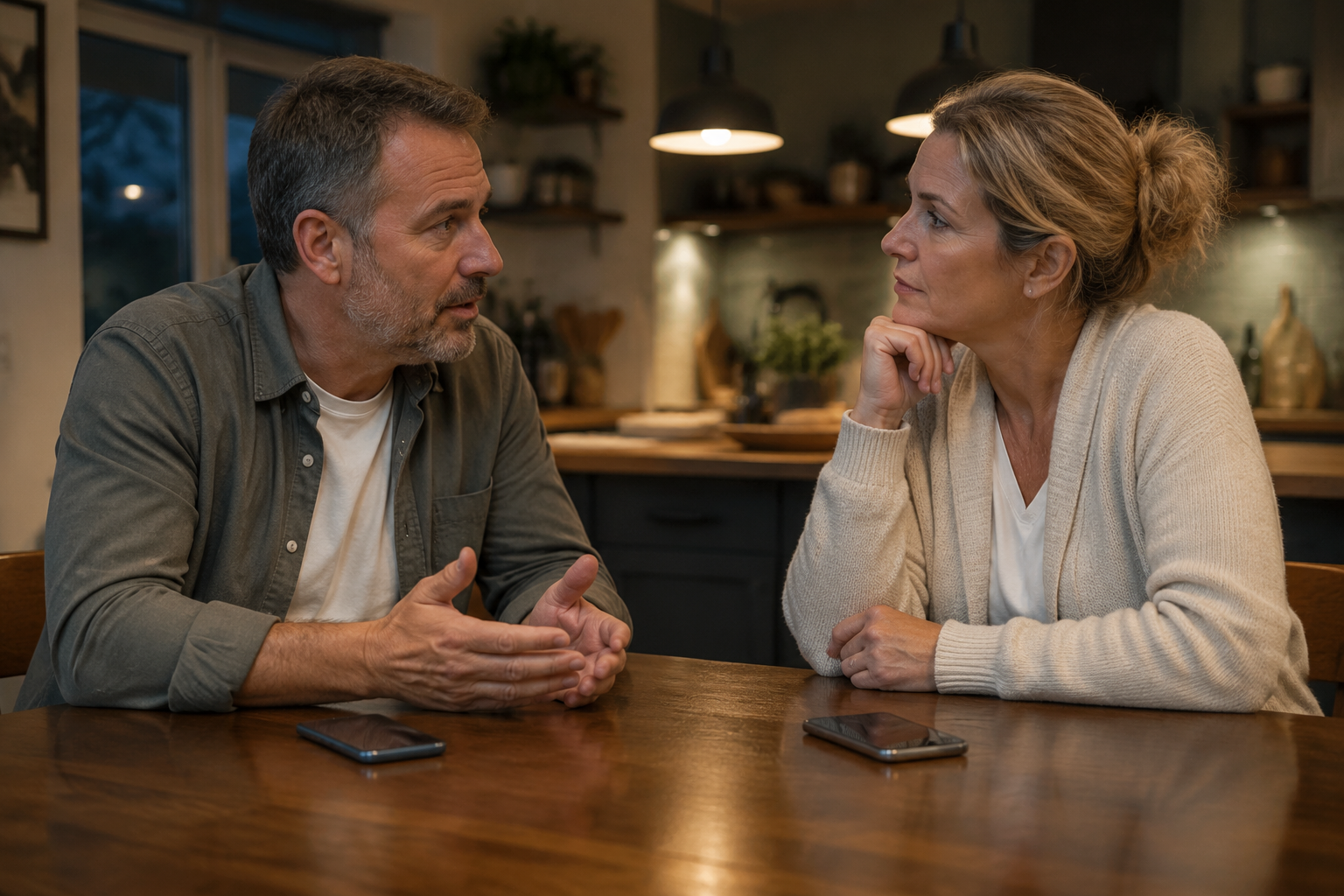
Love does not erase individuality. A healthy partner can have private thoughts, conversations with friends, time alone and a phone that is not available for inspection on demand.
Secrecy is different. It hides information that would reasonably affect the other person’s choices, consent, finances, safety or understanding of the relationship.
Privacy protects personhood
Privacy includes journaling, therapy, confidential conversations with friends and ordinary time that belongs to the individual. These spaces allow reflection and emotional independence.
A request for privacy should have a coherent boundary: ‘I do not share my friend’s personal story’ or ‘I need an hour alone after work.’ It does not require rewriting shared reality.
Secrecy protects a hidden arrangement
Secret spending, concealed contact with an ex, a second romantic life or lying about whereabouts changes the terms on which the partner is participating.
The issue is not merely that information was withheld. It is that the hidden fact prevented the other person from making an informed choice.
Phone access is not the same as trust
Demanding passwords and constant device inspection can become controlling. At the same time, sudden screen hiding, erased conversations and defensive stories can reasonably create concern.
Discuss the behavior and its impact directly. Surveillance may produce data, but it does not rebuild trust or create honesty.
Ask whether the boundary applies both ways
Fair privacy standards should be mutual. If one partner demands complete access while guarding their own activity, the imbalance matters.
Compatibility also matters. Two people can have different expectations about exes, finances or online communication without either being automatically wrong. They must make those expectations explicit.
Repair requires truth plus changed behavior
When secrecy is discovered, an apology is only the beginning. Repair may require disclosure about what affects the relationship, clear agreements, patience with reasonable questions and consistent follow-through.
Couples counseling can help when both people want repair. Safety planning and outside support are more appropriate when confrontation could lead to intimidation or violence.
Privacy says, ‘I remain a whole person inside this relationship.’ Secrecy says, ‘I am hiding information that would change your understanding of this relationship.’ Healthy love protects the first and refuses to normalize the second.